The patience of cold pressing
Why our oils are pressed slowly, without heat or hurry.

Why our oils are pressed slowly, without heat or hurry.
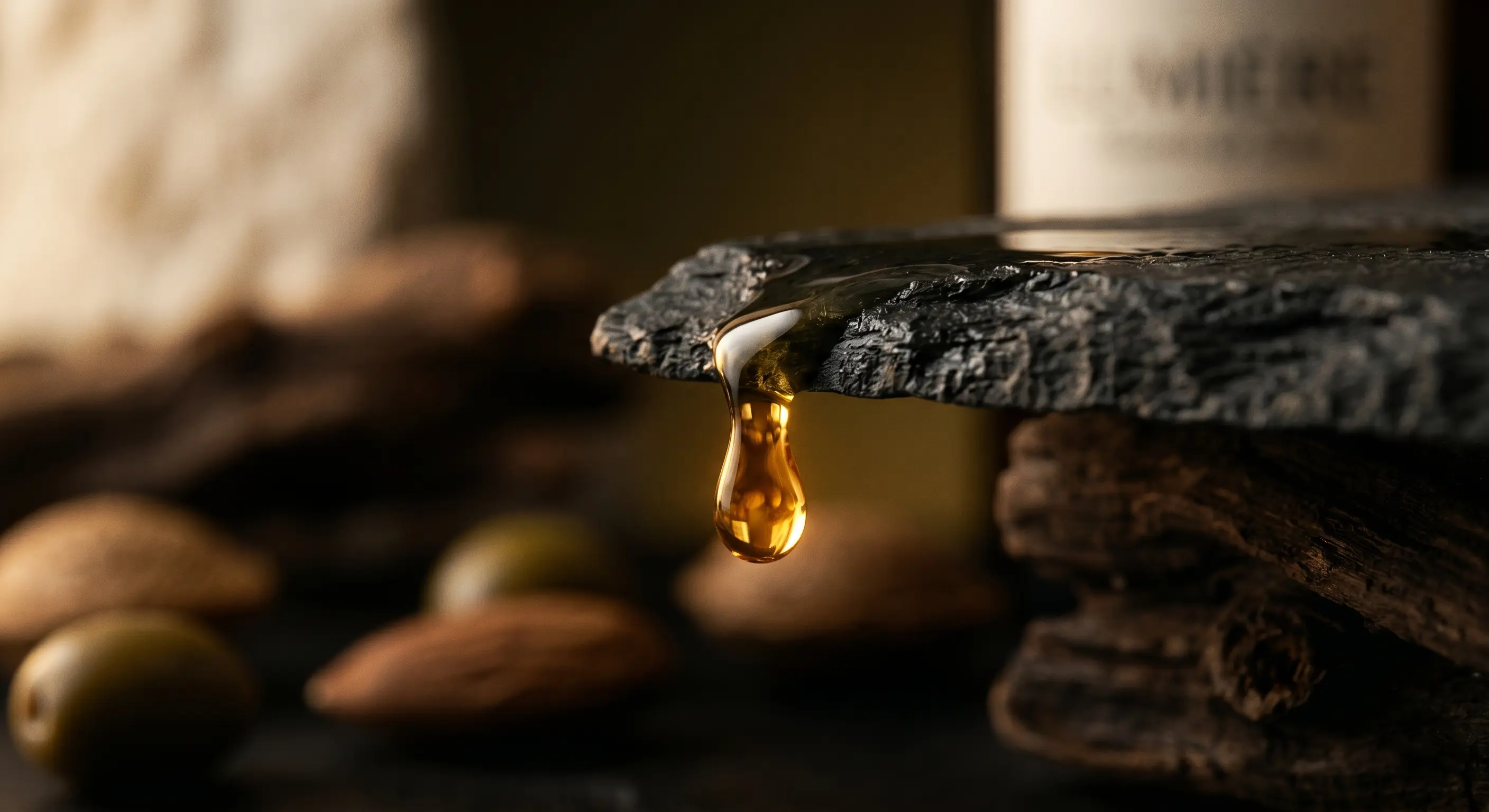
Cold pressing protects what is delicate. The process takes longer, but it keeps the oil close to its original state — rich, fragrant, and alive with the character of the seed.
Cold pressing is a slower method, but it protects what is fragile. The seed keeps more of its natural character, and the oil remains rich, soft, and fragrant.
Heat can make extraction faster. It can also flatten what makes an oil beautiful. We choose time instead.
There is no forceful transformation. Only pressure, time, and attention.
The seeds are cleaned, rested, and pressed in small batches. The first oil is collected carefully, then allowed to settle. Nothing is rushed into a bottle.
A well-pressed oil has presence. It should feel smooth between the fingers, never sharp or heavy.
When pressed slowly, the oil keeps a softer texture. It spreads more easily, sinks in gradually, and leaves the skin with a quiet sheen.
Small batches allow us to notice small changes. A harvest may be lighter one season, richer the next. The scent may shift. The color may deepen.
Rather than hiding these differences, we respect them. They are signs of a living ingredient.
A good oil should nourish without weight. It should soften, seal, and comfort.
We use cold-pressed oils at the end of the ritual, when the skin is still slightly damp. This helps hold hydration and gives the face a rested finish.
Journal

May 3
7 min read
Why the first harvest of the morning carries the softest scent.

May 8
5 min read
On doing less, choosing well, and giving the skin room to recover.
May 13
6 min read
A study in restraint: the botanical that quietly outperforms retinol — without the cost.